Tools & Equipment Insurance Cost (2026 Guide)
By Josh Cotner
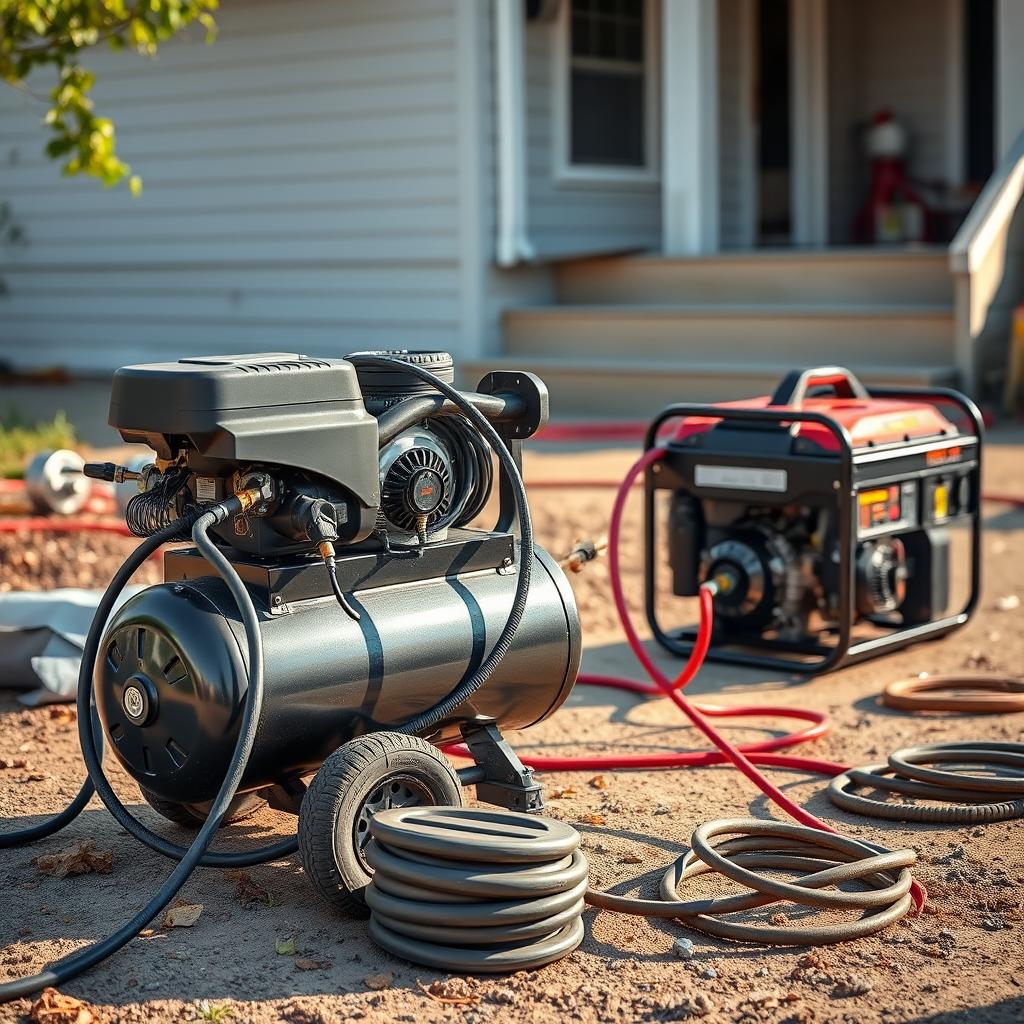
When you're insuring tens of thousands of dollars of nail guns, saws, generators, and compressors, "how much does tools and equipment insurance cost?" is the question that decides whether you schedule your gear or roll the dice. This guide gives you real 2026 price ranges and the factors that move them.
The short answer
Most contractors pay somewhere between $500 and $2,500 a year for a scheduled tools & equipment floater, depending on the total value of gear scheduled, the deductible you choose, and your theft-loss history. As a rough rule of thumb, expect premium to run about 1-3% of the total scheduled gear value annually.
A contractor with $25,000 of scheduled tools typically pays $400-$750 a year. A gear-heavy operation with $100,000+ of tools and mobile equipment might pay $2,000-$3,500 a year for a full program.
What you're actually paying for
A tools & equipment (inland marine) program can include several coverages, each priced separately:
- Scheduled tools floater — your nail guns, saws, lasers, and hand tools. Rated on total scheduled value.
- Scheduled mobile equipment — lifts, towable compressors, welder generators. Rated on agreed value per unit.
- Installation floater — materials in transit and until installed. Rated on material flow.
- Equipment breakdown — internal mechanical and electrical failures. A small add-on, often $150-$400 a year.
- Commercial auto — the trucks and trailers that haul the gear. Rated on vehicles and drivers.
The tools floater itself is usually the core. Add the rest based on what you actually own and how you work.
The factors that move your premium
1. Total scheduled value
This is the biggest lever. Premium tracks the total replacement value of the gear you schedule. More gear means more premium — but it also means more coverage when you need it. Don't under-schedule to save premium; a partial loss on an under-insured schedule still leaves you buying gear out of pocket.
2. Deductible
Most contractors choose a $250 to $1,000 deductible. A higher deductible lowers premium but increases your out-of-pocket at claim time. Watch for theft-from-unattended-vehicle deductibles, which can be higher ($1,000-$2,500) because truck and trailer break-ins are the most common contractor theft.
3. Replacement cost vs. actual cash value
Replacement cost (RC) costs slightly more than actual cash value (ACV) but pays dramatically more at claim time. An ACV policy can pay $150 for a $600 nailer. We always recommend RC — the premium difference is small and the claim difference is huge.
4. Your region's theft class
Some regions — Texas, the Northeast, and storm-rebuild surge zones — carry higher theft class rates. A contractor in Houston will typically pay more for the same schedule than a contractor in rural Montana, because the theft exposure is genuinely higher.
5. Loss history
Prior theft claims, especially recent ones, push premium up and can move you into excess-and-surplus (E&S) inland marine markets. A clean loss history is one of the best premium levers you control.
Sample 2026 pricing scenarios
These are illustrative ranges, not quotes — your actual premium depends on your specifics:
- $15,000 of scheduled tools, $500 deductible, clean loss history: roughly $350-$550/year
- $40,000 of scheduled tools + a towable compressor, $500 deductible: roughly $750-$1,200/year
- $100,000+ scheduled tools and mobile equipment, equipment breakdown added: roughly $2,000-$3,500/year
- Full program with installation floater, equipment breakdown, and commercial auto: varies widely, often $3,000-$7,000/year combined
How to lower your cost without giving up coverage
- Schedule accurately. Under-scheduling saves premium but leaves you underinsured at claim time. Over-scheduling wastes premium. Get the schedule right.
- Choose replacement cost. The slight premium bump pays for itself the first time you file a theft claim.
- Document loss control. Locked jobsite boxes, alarm systems, serialized gear, and secure storage can support better rates.
- Bundle the program. Placing tools, mobile equipment, breakdown, and auto with one carrier often unlocks program discounts.
- Keep a clean loss run. The single biggest premium factor you control over time is your claims history.
The bottom line
Tools & equipment insurance is one of the most cost-effective coverages a contractor buys — a few hundred to a few thousand dollars a year protects tens of thousands of dollars of gear that literally walks off jobsites every day. Get the schedule right, choose replacement cost, and structure the deductible for the theft exposure you actually face.
Get a free tools & equipment quote in about 15 minutes, or learn more about our scheduled tools floater coverage.
Need this coverage for your crew?
Get a real quote in about 15 minutes — we shop A-rated specialty trades markets.